Build a defense strategy to protect the peace.
Defense Legend 5: Survivor TD MOD APK v1.0.72 (Unlimited All)
| Name | Defense Legend 5: Survivor TD |
|---|---|
| Publisher | GCenter |
| Genre | Games |
| Version | 1.0.72 |
| Update | July 6, 2026 |
| Get it On |

|
Build a defense strategy to protect the peace.
| Name | Defense Legend 5: Survivor TD |
|---|---|
| Publisher | GCenter |
| Genre | Games |
| Version | 1.0.72 |
| Update | July 6, 2026 |
| Get it On |
|


Earth is gone. That’s where Defense Legend 5: Survivor TD begins. Developed by GCenter, the fifth entry in the Defense Legend series picks up after dark forces have rendered the planet uninhabitable, pushing what remains of humanity toward a new world among the stars. Players wake aboard a spaceship on a freshly discovered planet — and almost immediately, waves of alien monsters begin hunting down everything alive. The premise gives the familiar tower defense formula a sci-fi backbone that separates it visually and thematically from fantasy-style entries in the genre.
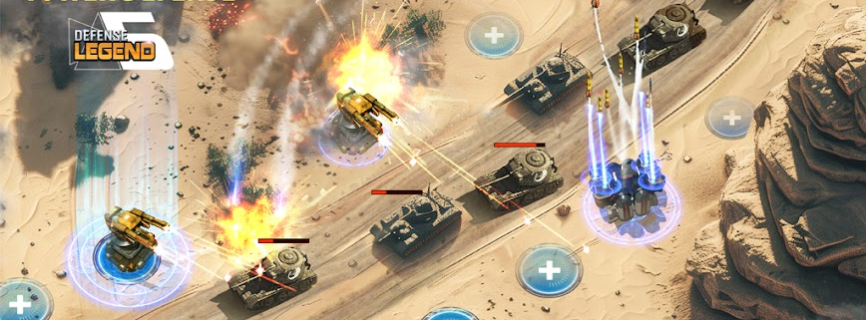
The core loop asks one question repeatedly: where should this go? Every turret placed on the map covers a specific range, targets enemies in a specific pattern, and costs resources that could have gone elsewhere. Getting that placement right — accounting for the path enemies take, which terrain the map uses, and what the incoming wave looks like — is where the strategy actually lives.
Each tower type brings distinct characteristics. Some deal sustained damage across a wide area. Others specialize against specific enemy types or hit harder against clustered groups. As waves grow more aggressive and enemy compositions shift, the right tower in the wrong position becomes a liability rather than an asset. Repositioning and reading the battlefield constantly is part of what the game demands.
What pushes Defense Legend 5 beyond basic tower defense is how deeply upgrades transform individual units. Towers don’t simply become stronger versions of themselves — at certain level thresholds, players choose an evolution path that fundamentally changes how that tower behaves. A standard turret might branch into a long-range precision cannon or a short-range area devastator, depending on the strategic need.
That branching system means two players defending the same map can end up with entirely different tower configurations. The resources invested into each upgrade require deliberate planning, since upgrading a tower locks those resources in and shapes the defensive layout for the rest of that stage.
One element that distinguishes Defense Legend 5 from standard tower defense entries is the spaceship system. The commander’s vessel isn’t just a narrative backdrop — it functions as an active weapon that can be upgraded with rockets, machine guns, lasers, lightning bolts, and laser cannons. Each weapon type affects different enemy categories differently, giving players a mobile offensive tool that complements fixed tower positions.
Upgrading the spaceship’s energy capacity also unlocks powerful situational skills — explosive bombs, increased movement speed, and enhanced defensive abilities — that can turn the tide during particularly difficult waves when static towers aren’t enough.
Battles take place across multiple terrain types, including aerial maps, forests, deserts, and icy environments. Each setting changes how enemies approach, which chokepoints exist, and which tower types perform best. A strategy that clears a forest map comfortably may fall apart in an open desert stage where enemy paths fan out unpredictably.
Commander selection adds another layer before each battle. Different commanders bring unique abilities that complement specific tower setups, making the pre-battle decision as important as anything placed on the map mid-stage.
Defense Legend 5: Survivor TD suits players who enjoy tower defense games with genuine strategic depth — multiple upgrade paths, terrain adaptation, and a spaceship system that adds offensive flexibility beyond static placement. The sci-fi setting and evolving tower mechanics give it an identity within a crowded genre, and the stage-based structure works well for both short sessions and extended play.
Related:
